The most expensive electrical work on a boat is the connection that “looked fine.”
Marine wiring fails three ways: chafe, water intrusion, and bad terminations. The first two get all the attention. The third is what actually starts fires.
A loose or under-crimped terminal climbs in resistance over time as oxidation creeps into the joint. Everything still works — the autopilot still autopilots, the bilge pump still pumps. Then a high-amp event (engine cranking, alternator dump, inverter under load) pushes 60+ amps through that creeping resistance, the joint cooks, and ignition source meets headliner foam.
Three things separate marine-grade work from “it works for now”:
Crimping. Ratcheting crimper with the proper die for terminal type (B-die for insulated barrels, hex for heavier lugs). Cheap mash-and-twist crimpers leave voids. Every terminal pull-tested before assembly.
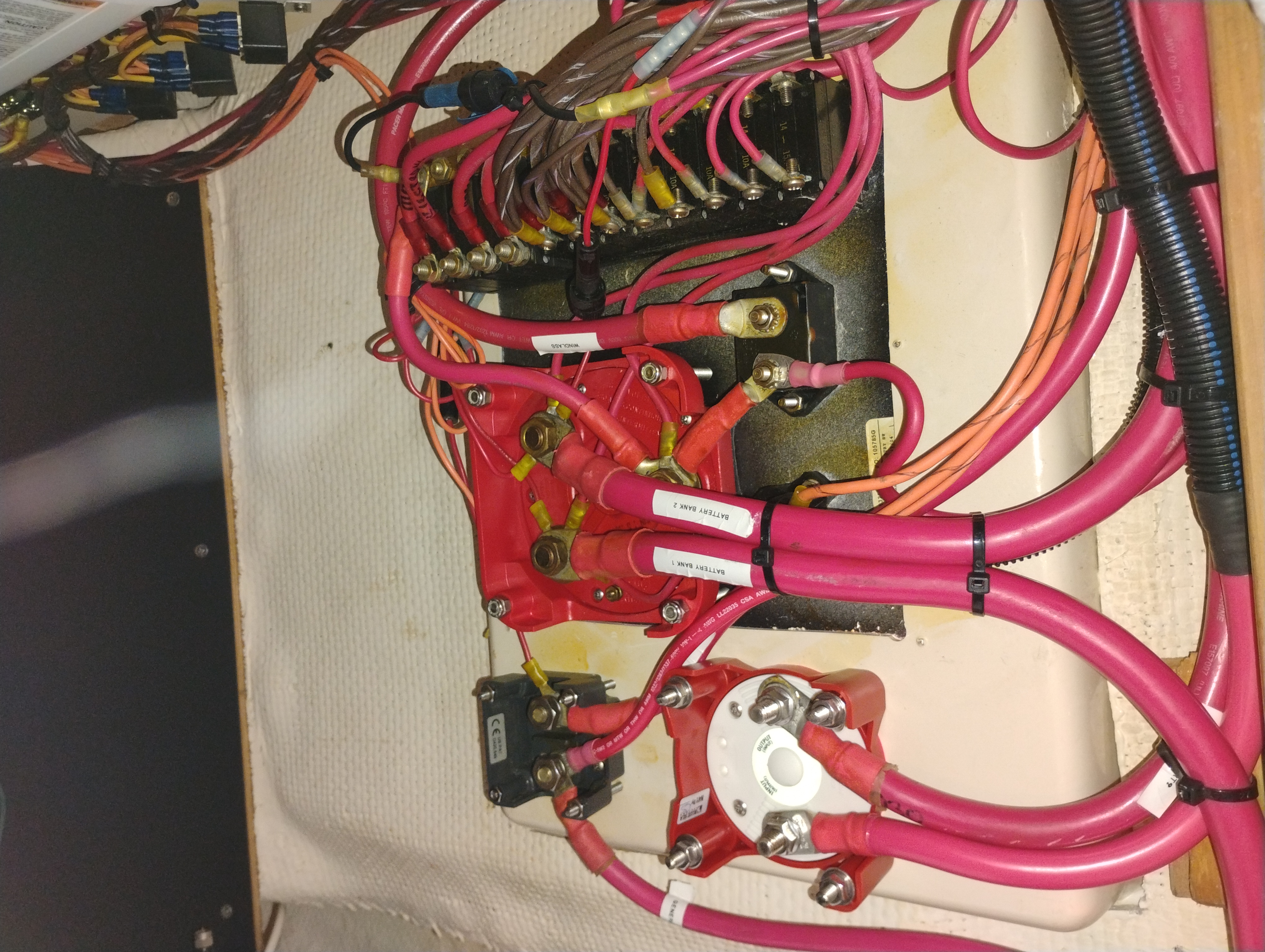
Terminal selection. Adhesive-lined heat-shrink only — the dual-wall kind where inner glue flows into the joint and seals against salt air. Tinned copper barrels resist galvanic creep. Vinyl auto-parts terminals aren't marine.
No solder. ABYC standard is crimp + heat-shrink, not solder. Solder creates a rigid stress riser; under vibration the wire fatigues and breaks just outside the joint.
A two-dollar terminal and 20 seconds with the right tool is what's between “this works for 20 years” and “this is what made the news.”