The fastest way to fry a boat is feeding two AC sources into the same bus without isolation.
Marine AC has multiple sources — shore, generator, inverter — and any combination can be live at any time. Code (ABYC E-11, CSA C22) requires clean separation. Skipping it is the difference between “powers up at the dock” and “energizes the genset frame at the marina.”
Transfer switch enforces source priority. Shore, gen, and inverter outputs all run into a transfer switch with break-before-make logic. One source feeds the bus at a time, transition enforced in hardware. Automatic variants handle priority when shore returns or generator starts.
Galvanic isolator on the shore inlet. Blocks low-voltage DC currents from traveling between dock-grounded boats through the safety ground. Without it, your zinc anodes are protecting the marina's pilings.
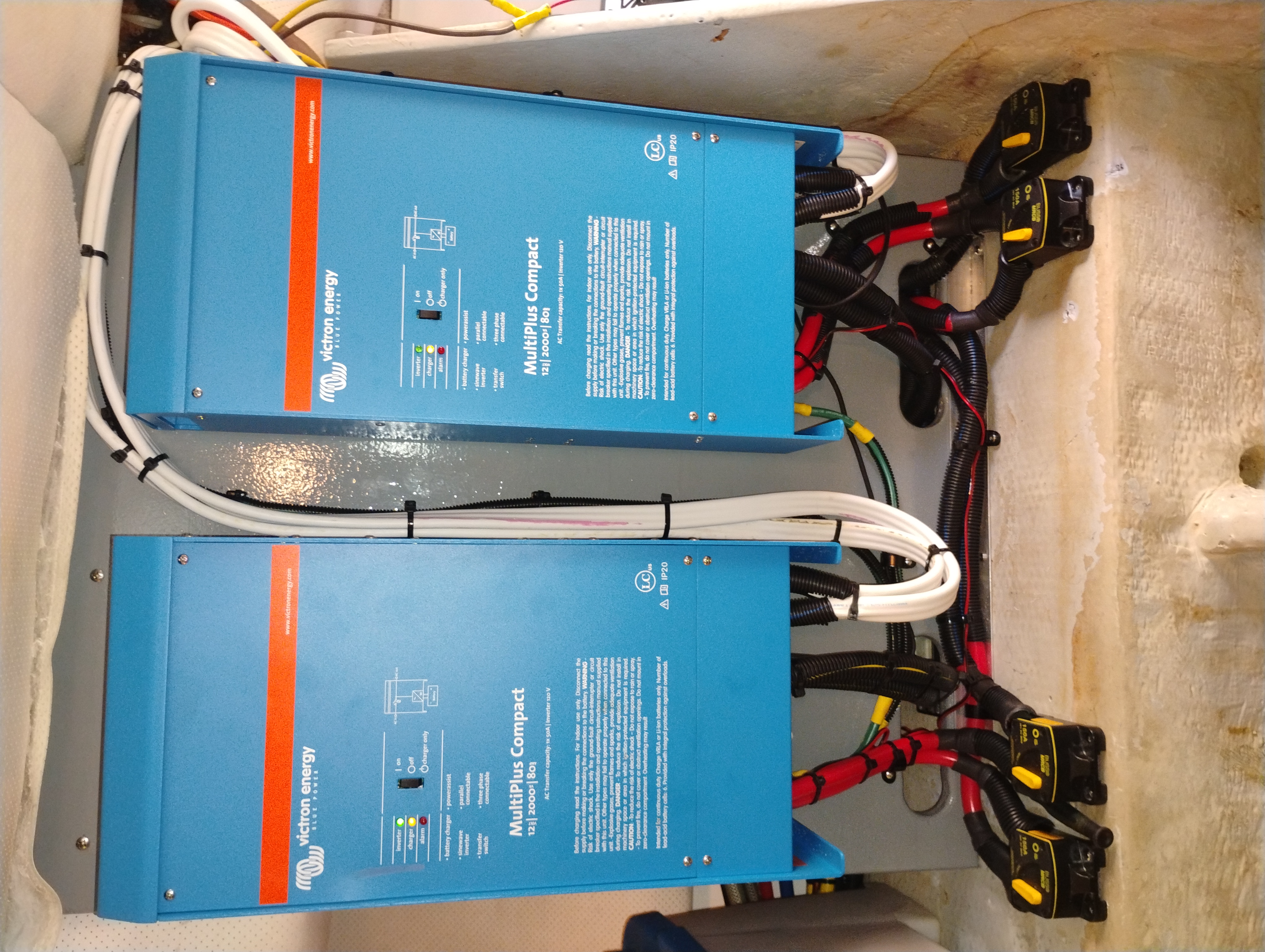
Parallel inverters need matched units. Two 3000W inverters in parallel give 6000W — but only if they're identical models with master/slave config and the CAN cable the manufacturer specifies. Mismatched units fight each other and sync fails. The battery bank also has to support the parallel-rated continuous draw at C-rate, not just the wattage on paper.
Essential vs non-essential legs. Critical loads (nav, refrigeration, fuel pumps) on the inverter-fed branch; high-draw loads (water heater, induction cooktop, AC) on a branch only fed when shore or genset is running. Separation prevents killing the bank by microwaving at 3am.