A 3000W inverter on a 200Ah battery bank gives you 90 minutes of runtime, not “all day.”
Inverter sizing is the easy part — match wattage to your peak AC load. The hard part is matching the rest of the system so it can actually deliver what it's rated for.
Bank size sets runtime. Rule of thumb: 200Ah usable (50% for AGM, 80% for LiFePO4) per 1000W of inverter buys roughly an hour at full load. A 3000W inverter on a 200Ah AGM bank delivers ~30 minutes before voltage sag stops it. LiFePO4 stretches that — flatter discharge curve, higher C-rate.
Discharge rate matters more than capacity. A 200Ah AGM rated 0.3C sustains ~60A before sag triggers the inverter's low-voltage cutoff. The same 200Ah in LiFePO4 sustains 200A+ comfortably. The inverter doesn't care about the “200Ah” sticker — it cares about voltage at the terminals while drawing.
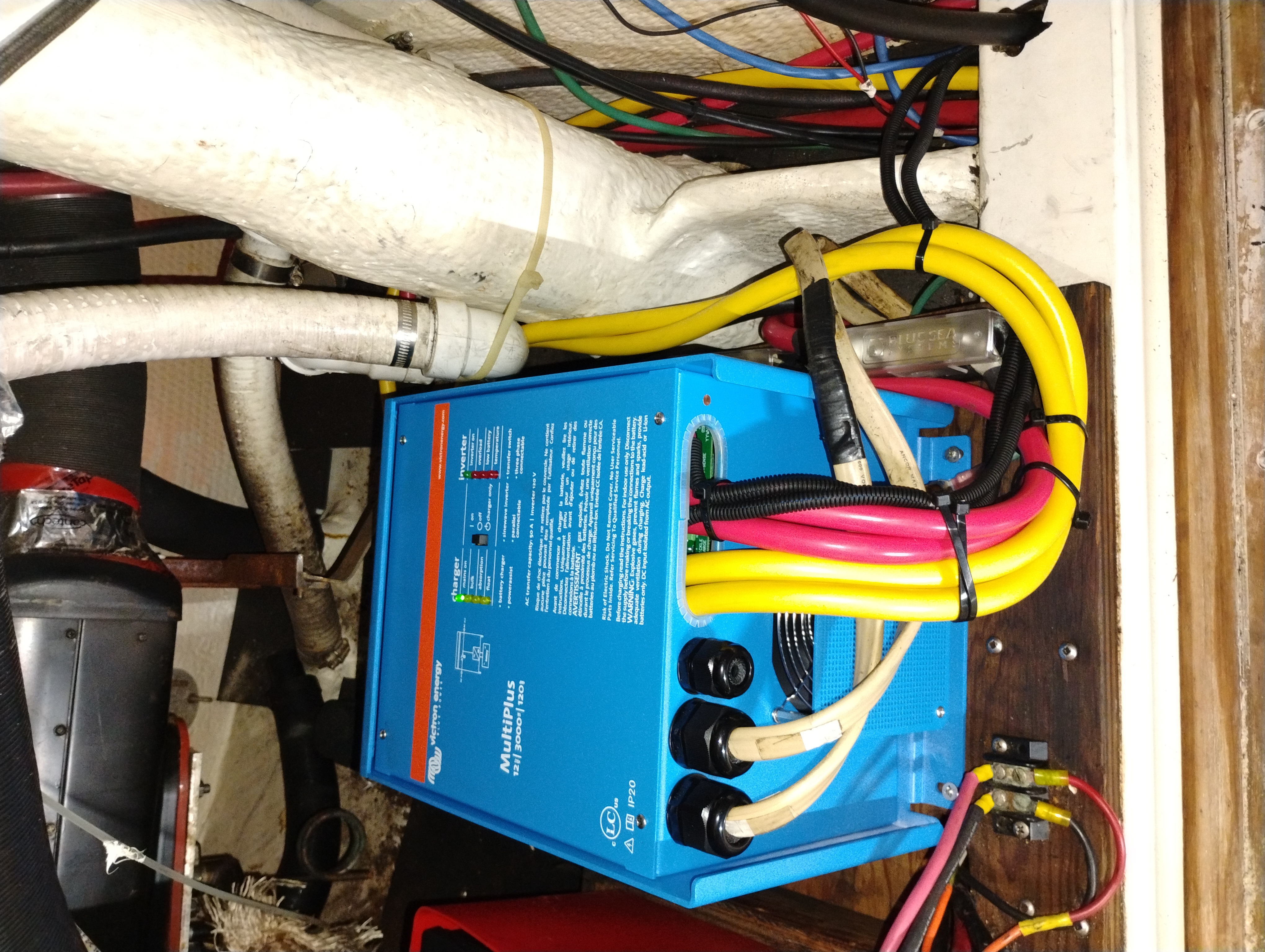
Charger sizing is the symmetric problem. A 60A charger on a 600Ah bank from 50% takes ~5 hours of shore time. Undersize and you never catch up overnight. Oversize on a small bank and you cook the cells. Match charger rate to bank C-rate ceiling, not “as big as you can afford.”
Wire and fusing follow the inverter. A 3000W inverter at 12V pulls 250A continuous, 400A surge. That's 2/0 or 4/0 cable, Class T fusing, and a voltage-drop calc on the run length. Skipping this is where the bus-bar gets hot.
NMEA-certified design — inverter sized to loads, bank sized to inverter, charger sized to bank, wire sized to worst-case current.