Bought an older yacht? The first system to audit isn't the engine — it's DC distribution.
About 85% of breakdowns at sea trace to DC electrical issues, not engine failures. The engine itself is mechanically reliable; what kills it is the DC system feeding the starter, fuel pump, glow plugs, and instrumentation. Same with navigation, comms, bilge pumps, refrigeration — all DC-fed, all dependent on a distribution system that may not have been touched since 1995.
Four things to inspect before the first long trip:
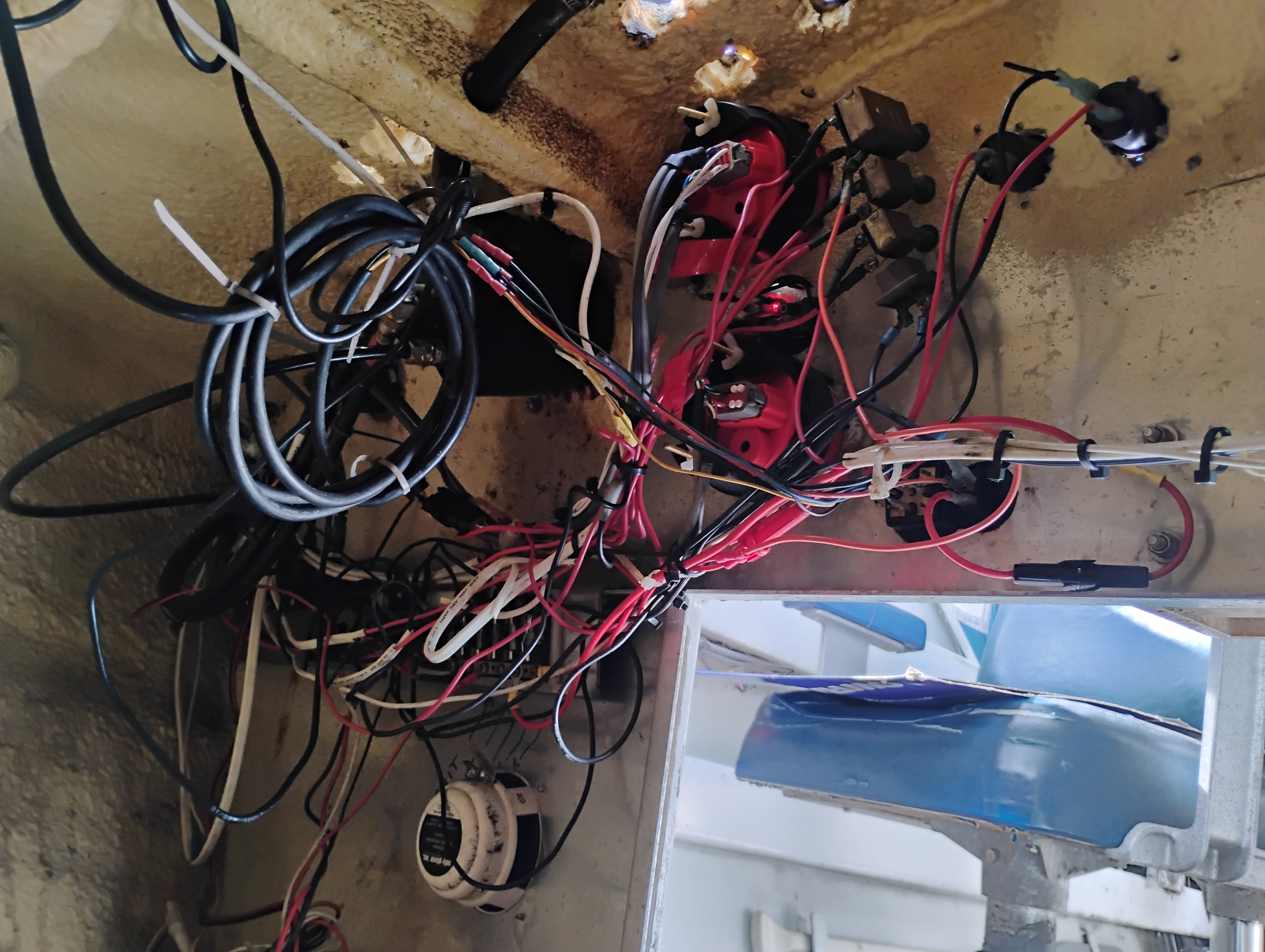
Wire and fusing against current standards. ABYC E-11 has tightened on tinned conductors, fuse placement (within 7 inches of the battery), voltage drop (<3% for critical loads), and minimum gauges. Old solid-copper or vinyl-insulated wire isn't to spec. Every battery feed needs a fuse within reach of the source.
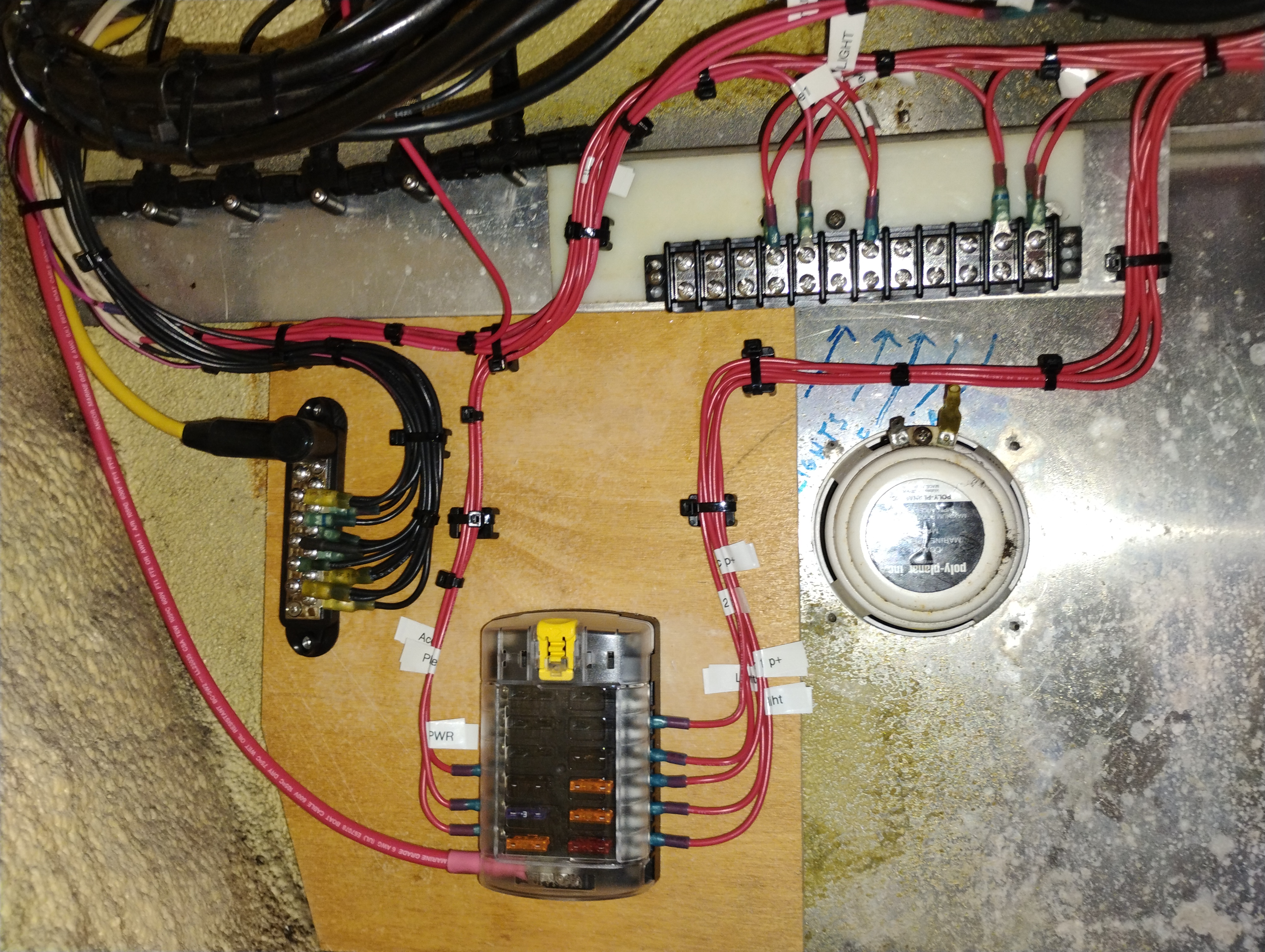
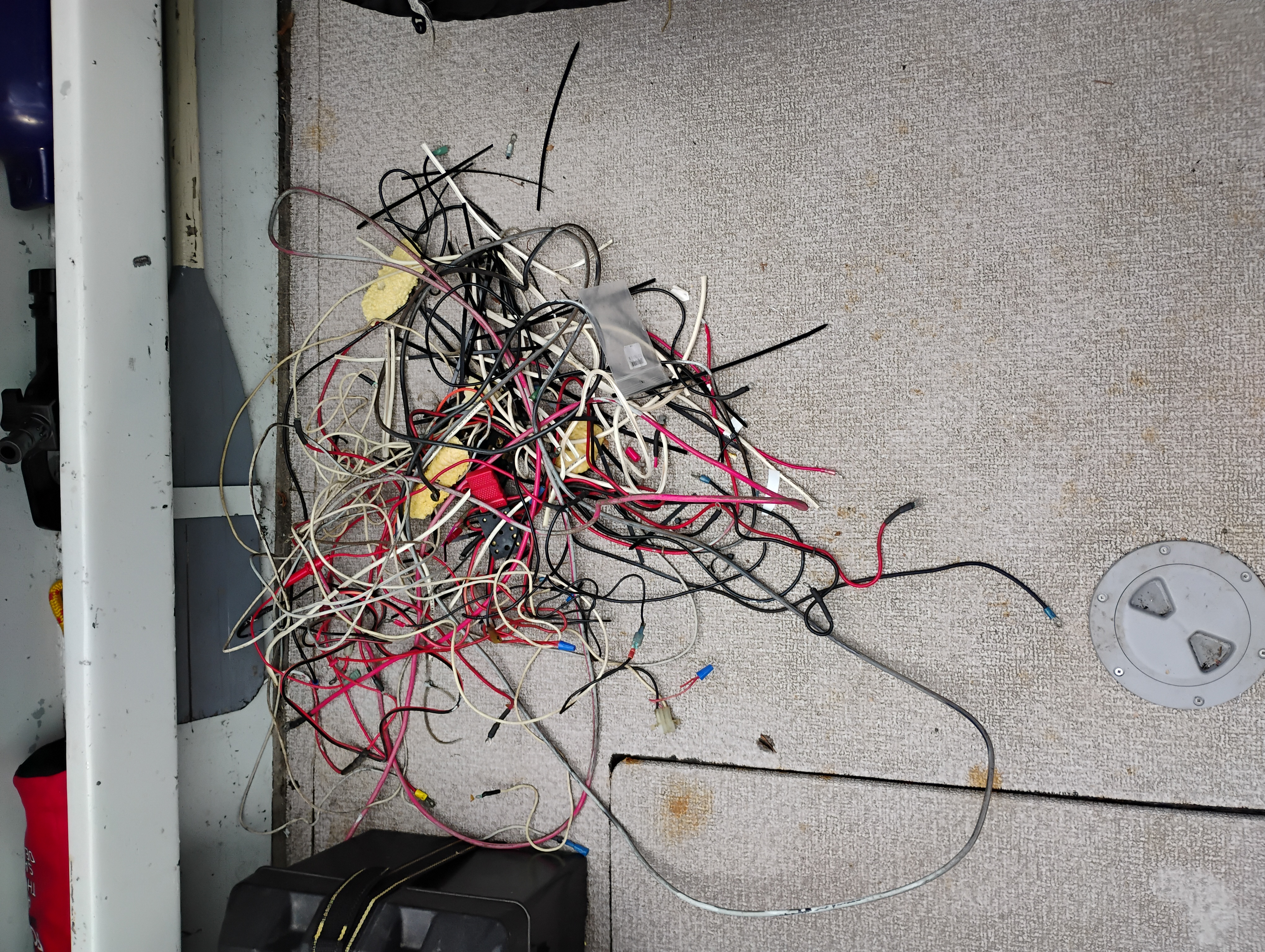
Rats-nest behind the panel. Three decades of DIY add-ons leave helm and engine compartment looking like spaghetti — fish finders Scotch-lok'd into helm wiring, stereo upgrades on 22-gauge accessory feeds, dead equipment with leads still hot. Strip it back to documented circuits.
Bonding continuity. Galvanic protection only works if the bonding network is connected end-to-end. Corroded jumpers under floorboards are common and invisible.
Main fuse on the battery feed. Older boats often have a battery switch but no main fuse between bank and switch. ABYC requires it. A direct fault on that cable run with no fusing is a battery-fire scenario.